

Model Answer
The question of whether governments should prioritise renewable energy over fossil fuels has become increasingly important as countries attempt to meet growing energy demands while addressing environmental concerns. I strongly agree that public investment should be redirected towards renewable sources, although fossil fuels may still have a limited role during the transition.
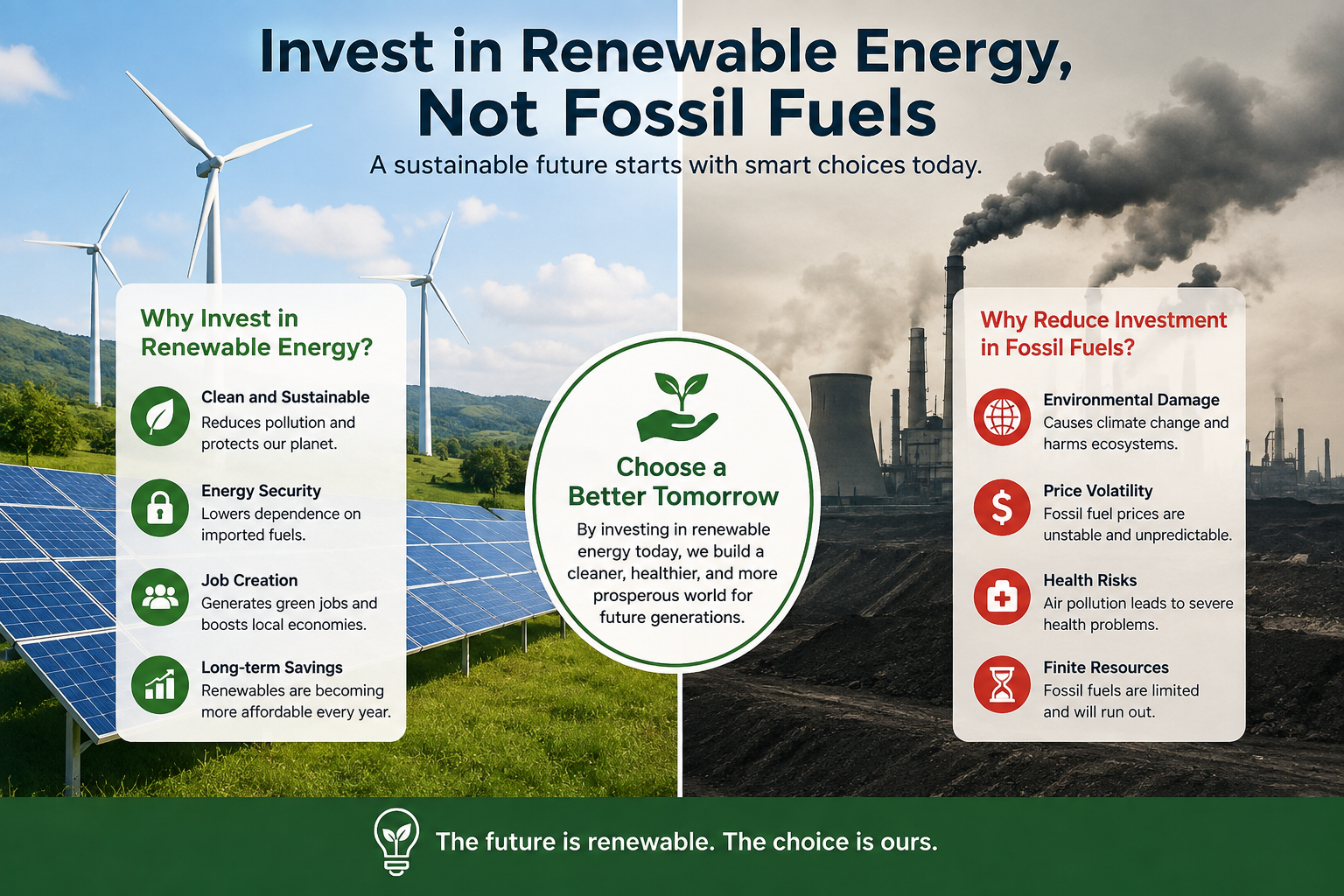
One compelling reason for prioritising renewable energy is its long-term environmental sustainability. Conventional fuels such as coal, oil and natural gas release substantial amounts of greenhouse gases when they are extracted and burned. This contributes to climate change, air pollution and, in many cities, serious public-health problems. Renewable sources, including solar, wind and hydropower, generate electricity with considerably lower emissions during operation. For example, a country that gradually replaces coal-fired power stations with large-scale solar and wind farms can reduce its carbon emissions while continuing to meet the electricity needs of households and businesses. Therefore, government funding for clean energy can serve both environmental and social objectives.
Another important argument concerns energy security and economic resilience. Fossil-fuel-dependent countries can become vulnerable to fluctuations in international energy prices and disruptions in supply. By investing in domestic renewable infrastructure, governments can reduce their dependence on imported fuel and create a more stable energy system. Moreover, the expansion of renewable-energy industries can generate employment in areas such as engineering, construction, maintenance and research. Although the initial investment in renewable infrastructure can be substantial, technological improvements and economies of scale are gradually making many renewable technologies more competitive.
However, it would be unrealistic to expect fossil fuels to disappear immediately. Renewable energy production can be affected by weather conditions, and many countries still lack sufficient energy-storage capacity and transmission infrastructure. In addition, industries such as aviation, shipping and heavy manufacturing can be difficult to decarbonise quickly. Consequently, governments may need to maintain a limited investment in conventional energy while simultaneously developing batteries, modern electricity grids and other technologies that can make renewable energy more reliable.
In conclusion, I strongly agree that governments should allocate significantly more investment to renewable energy than to fossil fuels. Nevertheless, fossil fuels may continue to play a transitional role until renewable technologies, energy storage and electricity infrastructure are sufficiently advanced. The most sensible strategy is therefore not an abrupt rejection of conventional energy, but a deliberate and sustained transition towards a cleaner and more secure energy system.