
Question:
Artificial intelligence (AI) is increasingly being used to perform tasks that were traditionally done by humans. Some people believe that AI will eventually replace a large number of human workers, while others think that it will create new employment opportunities. Discuss both views and give your own opinion.
Band 9 Model Answer
The rapid development of artificial intelligence has transformed the modern workplace, enabling machines to perform tasks that once required human labour. While some people argue that this technological revolution will result in widespread unemployment, others believe that AI will generate new and more sophisticated employment opportunities. Although automation is likely to eliminate certain routine occupations, I believe that AI will ultimately reshape rather than destroy the labour market, provided that workers are equipped with relevant skills.
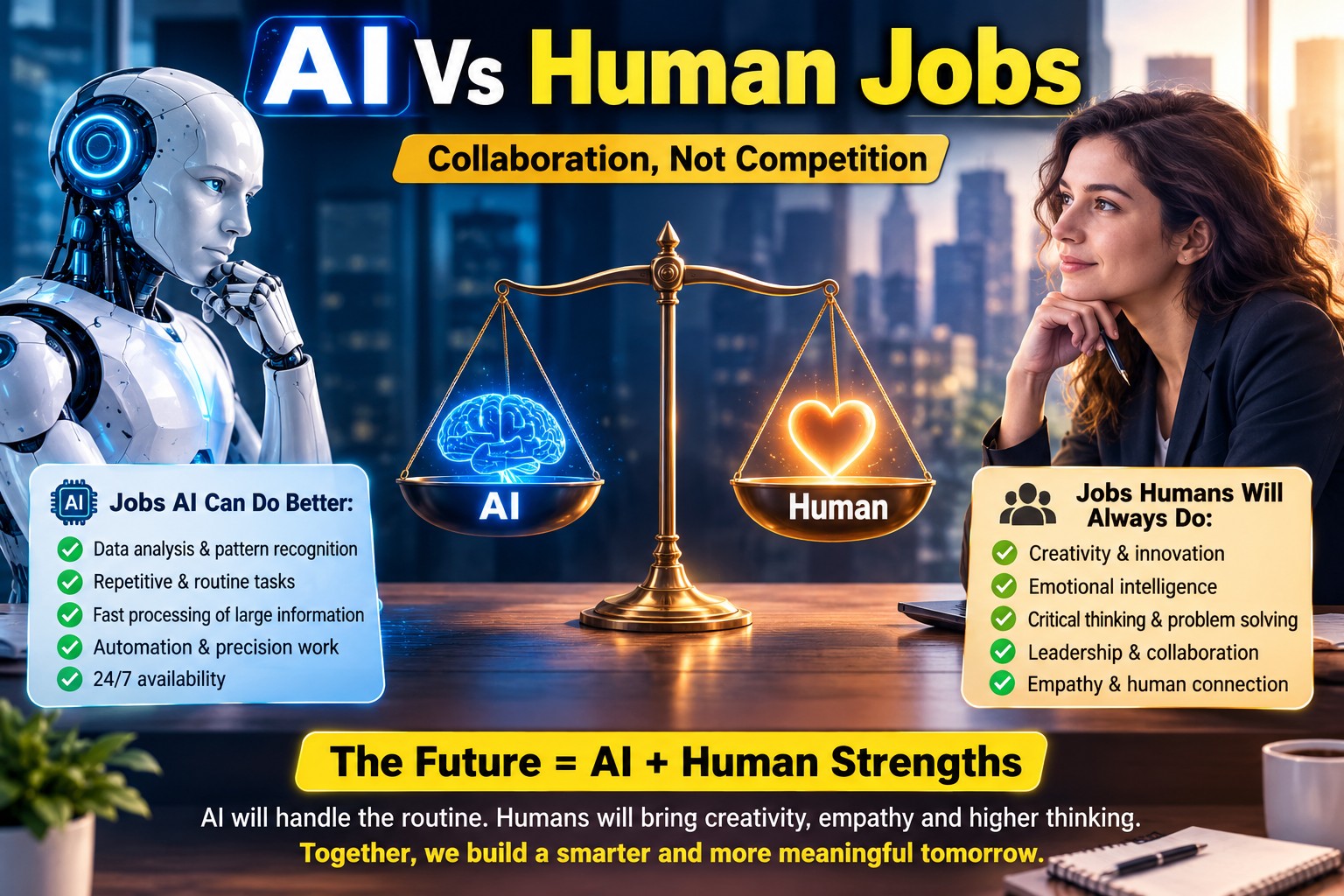
On the one hand, there are legitimate concerns that AI could displace a substantial proportion of the workforce. Machines can process enormous quantities of information, identify patterns and perform repetitive tasks considerably faster and more accurately than humans. Consequently, industries such as manufacturing, customer service, transportation and basic administrative work may require fewer employees. For example, automated systems can now handle customer enquiries, analyse financial records and perform quality-control procedures with minimal human intervention. Workers whose occupations depend primarily on repetitive and predictable tasks may therefore face considerable job insecurity. Furthermore, businesses have a financial incentive to automate because machines can operate continuously without salaries, holidays or other employment-related costs.
On the other hand, technological advancement has historically created new occupations while making existing ones more productive. The expansion of AI is likely to generate demand for professionals who develop, maintain, monitor and regulate intelligent systems. Jobs related to AI engineering, cybersecurity, data science and digital ethics are already becoming increasingly important. More importantly, AI cannot easily replicate distinctly human qualities such as empathy, creativity, moral judgement, leadership and interpersonal communication. A teacher, for instance, does far more than deliver information; an effective educator motivates students, understands their emotional needs and adapts lessons to individual circumstances. Rather than competing directly with such workers, AI can function as a powerful tool that enhances their effectiveness.
In my view, the most realistic outcome is a transformation of employment rather than its complete disappearance. The principal challenge will be ensuring that people can adapt to changing occupational requirements. Governments and educational institutions should therefore prioritise lifelong learning, vocational training and digital literacy so that employees can transition into emerging roles. Companies, too, have a responsibility to retrain existing staff instead of treating automation solely as a means of reducing headcount.
In conclusion, AI will undoubtedly replace some human jobs, particularly those involving repetitive and predictable activities. Nevertheless, it is unlikely to make human labour obsolete because technology also creates new professions and cannot fully reproduce human judgement, creativity and emotional intelligence. The future of employment should consequently be viewed not as a battle between humans and machines, but as an opportunity for both to work together.
🔥 Band 9 Vocabulary
- widespread unemployment — unemployment affecting a large proportion of society
- technological revolution — a major transformation caused by technology
- labour market — the system in which employers and workers interact
- job displacement — workers losing jobs because their roles are automated
- repetitive and predictable tasks — routine activities that follow the same pattern
- job insecurity — uncertainty about keeping one’s employment
- employment-related costs — expenses associated with employing workers
- technological advancement — progress in technology
- lifelong learning — continuous education throughout one’s career
- digital literacy — the ability to use and understand digital technology
- human judgement — decision-making based on human reasoning and experience
- emotional intelligence — the ability to understand and respond appropriately to emotions
- occupational requirements — skills and abilities needed for a particular job
- retrain existing staff — teach employees new skills for changing roles