

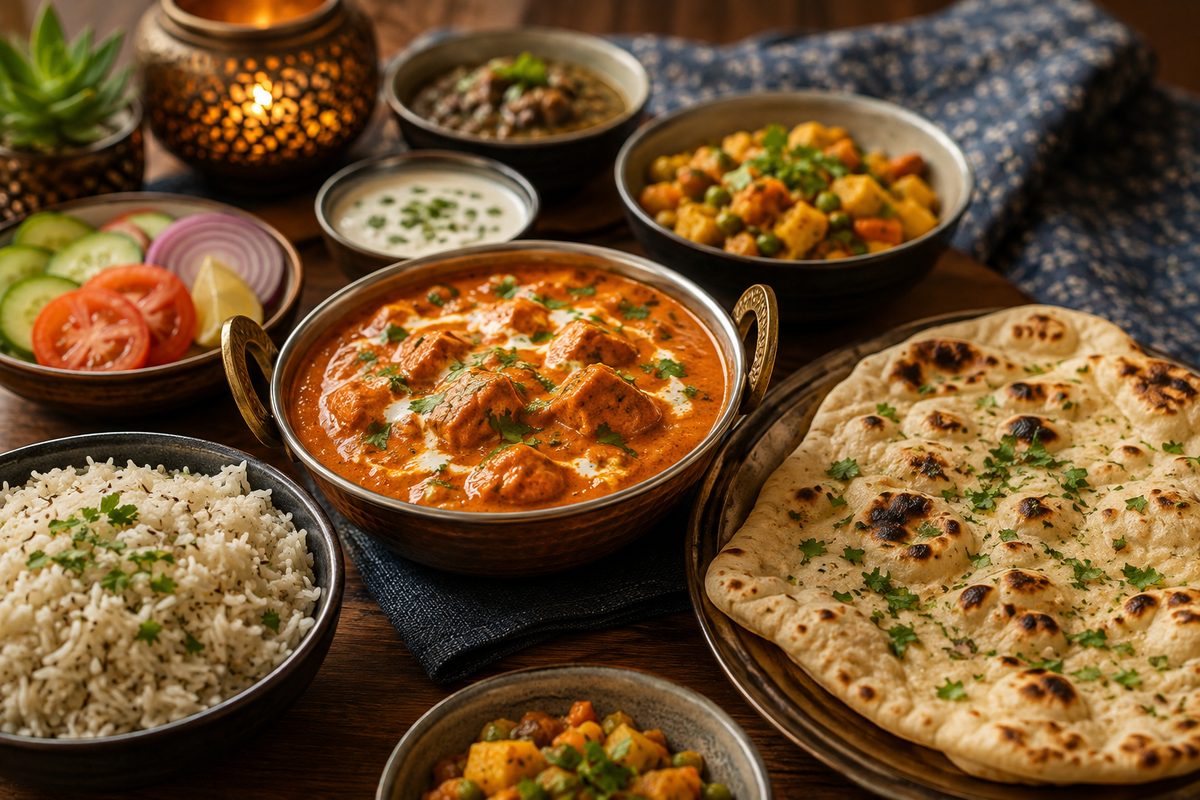
Describe a meal you had that you really enjoyed.
You should say:
- what the meal was
- where you had it
- who you had it with
- and explain why you enjoyed it so much
Band 9 Sample Answer
Well, one meal that stands out in my memory is a traditional Indian dinner I had with my family at my home a few months ago. It wasn’t anything particularly fancy, but it was absolutely delicious and incredibly satisfying.
My mother prepared a mouth-watering spread of homemade butter chicken, naan, jeera rice, mixed vegetables, salad and, of course, some homemade kheer for dessert. The aroma of the food filled the entire house, and honestly, I couldn’t wait to sit down and eat.
What made the meal particularly special was that all my family members were there. We don’t always get the opportunity to have dinner together because everyone has their own busy schedule. So, that evening, we sat around the dining table, caught up with each other, shared jokes and talked about what had been happening in our lives.
The food itself was rich, flavourful and perfectly seasoned. The butter chicken was creamy without being too heavy, while the naan was soft and freshly cooked. But what I enjoyed most wasn’t actually the food; it was the warm and relaxed atmosphere.
I think that’s why this meal has stuck in my mind. It reminded me that food is not merely about satisfying hunger. It can bring people together, create lasting memories and strengthen family bonds. So, even though I’ve had meals at expensive restaurants, this simple homemade dinner remains one of the most memorable meals I’ve ever had.
⭐ Band 9 Vocabulary
- stands out in my memory = is particularly memorable
- a mouth-watering spread = a large selection of delicious food
- rich and flavourful = full of strong, pleasant flavours
- perfectly seasoned = having the right amount of spices/salt
- catch up with someone = talk about recent events in each other’s lives
- warm and relaxed atmosphere = comfortable and friendly environment
- stick in my mind = remain memorable
- bring people together = make people feel connected
- strengthen family bonds = make family relationships stronger
🎤 IELTS Speaking Part 3 — Food
1. Why do people enjoy eating food from other countries?
People are naturally curious about different cultures, and food is probably one of the easiest ways to experience another culture. For example, someone who has never visited Thailand can try Thai cuisine and get a small taste of its culture. Besides that, international food gives people a break from their usual eating habits and allows them to experiment with new flavours.
2. Do you think people eat healthier food nowadays?
I would say it is a mixed picture. On the one hand, people are much more aware of nutrition than they were in the past. They read food labels, count calories and look for healthier alternatives. On the other hand, fast food and highly processed food are more accessible than ever, so many people still have unhealthy diets because of their busy lifestyles.
3. Why do some people prefer fast food?
The main reason is convenience. People who work long hours may not have enough time to prepare a proper meal, so grabbing a burger or ordering a pizza seems like an easy solution. Fast food is also relatively affordable and widely available. In addition, companies spend enormous amounts on advertising, which makes these foods particularly appealing to young people.
4. Do you think traditional food is disappearing?
To some extent, yes. Globalisation and changing lifestyles have influenced people’s eating habits considerably. Younger generations are increasingly exposed to international cuisines and Western-style fast food. However, I wouldn’t say traditional food is disappearing completely. In many families, traditional recipes are still passed down from one generation to another, especially during festivals and family gatherings.
5. Why is food important during festivals?
Food plays an important role in festivals because it is closely connected with culture, tradition and social bonding. Families often prepare special dishes that they don’t normally eat throughout the year. For instance, during Indian festivals, people prepare sweets and traditional delicacies and share them with relatives and neighbours. So, food becomes a way of celebrating cultural identity and bringing communities together.
6. Should children be taught how to cook?
Absolutely. Cooking is an essential life skill, rather than merely a household chore. If children learn to cook, they become more independent and are more likely to understand the importance of balanced nutrition. It can also prevent them from becoming overly dependent on packaged meals or fast food when they grow up.
7. Why do some people dislike cooking?
There could be several reasons. Some people find cooking time-consuming and tiring, particularly after a demanding day at work. Others simply lack confidence in the kitchen because they were never taught basic cooking skills. Some people may also prefer eating out because they enjoy the social experience of going to restaurants.
8. Is eating together as a family important?
Yes, definitely. Family meals provide an opportunity for people to reconnect after spending most of the day dealing with work, school or other responsibilities. Even a 20-minute dinner can give family members a chance to talk about their experiences and strengthen their relationships. In today’s fast-paced world, these moments of connection are particularly valuable.
9. Do you think restaurants will become more popular in the future?
Yes, I believe so. As urban lifestyles become increasingly hectic, people may have less time and inclination to cook at home. Food-delivery services will probably make restaurants even more accessible. However, I think there will also be growing demand for healthy and home-style food, because people are becoming increasingly conscious of their health.
10. Is it better to eat at home or in a restaurant?
I think both have their advantages. Home-cooked food is generally healthier and more economical, whereas restaurants offer variety, convenience and a social experience. Personally, I would choose home-cooked food for my regular meals but go to restaurants occasionally when I want to celebrate something or spend quality time with friends.
🔥 High-Level Phrases for Part 3
Try to naturally use these instead of memorising complicated vocabulary:
“It depends on the circumstances.”
“There are several factors behind this trend.”
“I would say it is a mixed picture.”
“One of the main reasons is convenience.”
“This is closely linked to changing lifestyles.”
“It has both advantages and drawbacks.”
“From my perspective…”
“What matters most is…”
“In the long run…”
“It is not merely about food; it is also about culture and social connection.”