
You should say:
- What the skill is
- Why you want to learn it
- How you would learn it
- And explain how this skill would benefit you
Band 9 Sample Answer
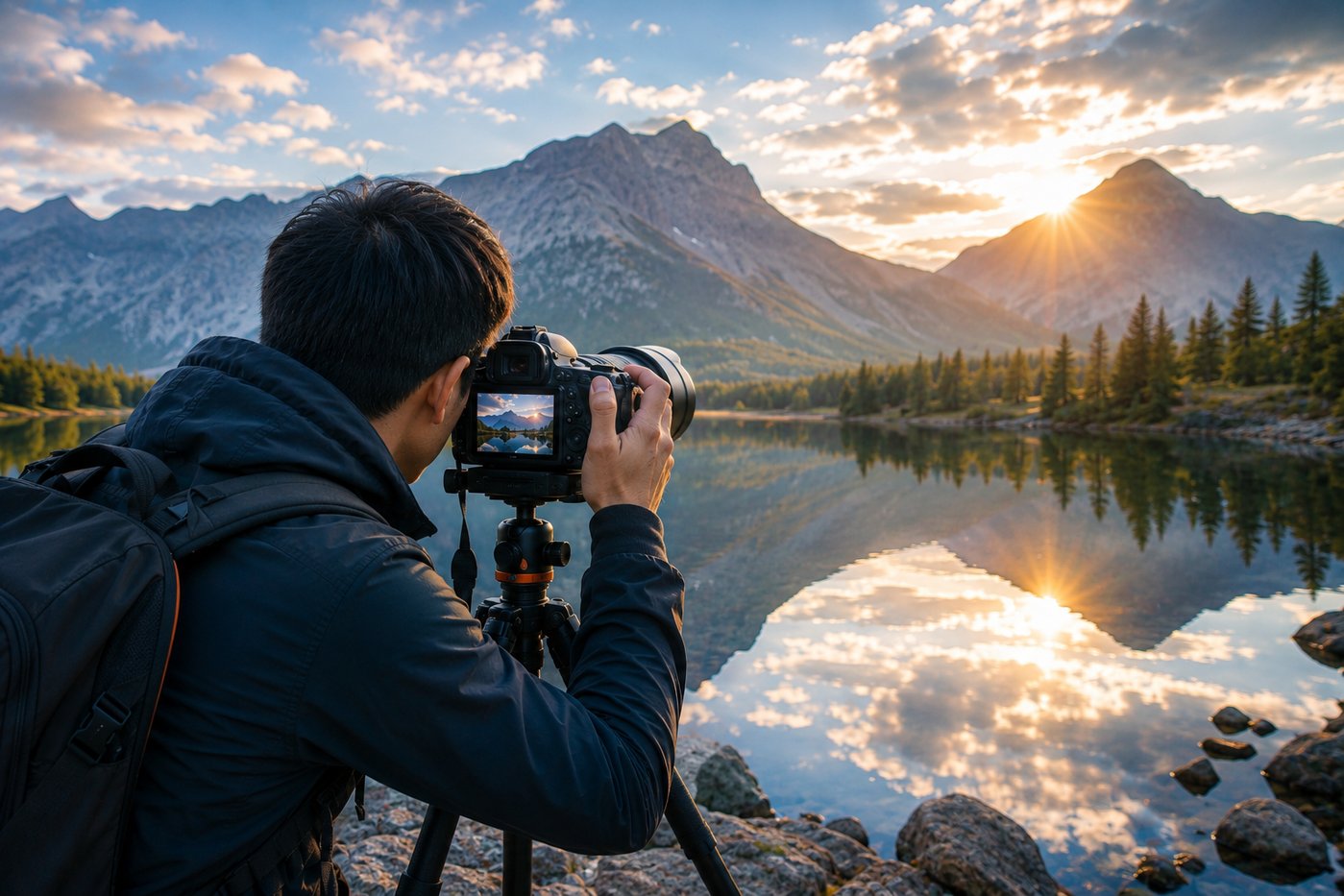
One skill I would genuinely like to learn is photography, particularly taking professional-looking pictures with a proper camera. Although I can take decent photos with my phone, I have always wanted to understand the technical side of photography.
The main reason I want to learn this skill is that photography allows people to capture moments and preserve memories. Whenever I travel or attend a special event, I often see beautiful scenes that I would love to capture properly. Unfortunately, simply pointing a camera and pressing the shutter button does not always produce a great photograph.
If I decided to learn photography seriously, I would probably start with an online course and then practise regularly. I would learn about composition, lighting, exposure and camera settings, and I would gradually experiment with different types of photography, such as landscapes, portraits and street photography. I would also study the work of experienced photographers to understand what makes an image visually appealing.
I believe this skill would benefit me in several ways. First of all, it would give me a creative outlet and allow me to express myself visually. Secondly, it could be extremely useful for creating content for social media or a website. Most importantly, it would encourage me to pay greater attention to my surroundings instead of simply rushing through everyday life.
So, although photography might seem like a simple hobby, I believe learning it properly would be both creatively rewarding and practically useful.
🔥 High-level phrases:
creative outlet • preserve memories • visually appealing • technical side • practise regularly • express myself visually • practically useful • creatively rewarding
IELTS Speaking Part 3 — Skills & Learning
1. Why do people want to learn new skills?
People learn new skills for a variety of reasons. Some want to improve their career prospects, while others simply want to pursue a personal interest. I also think learning something new gives people a sense of achievement. For example, someone who learns photography may eventually turn it into a hobby, a side business, or even a full-time career.
2. Is it easier for young people to learn new skills than older people?
Generally speaking, young people may learn certain skills more quickly because they tend to have greater flexibility and more time to practise. However, I don’t think age is a major barrier. Older people often have more patience, discipline and life experience. In fact, if someone is genuinely motivated, they can master a new skill at almost any age.
3. What skills are important for young people nowadays?
I would say digital literacy, communication skills and problem-solving abilities are particularly important. Young people are entering an increasingly competitive and technology-driven job market, so knowing how to use digital tools is essential. At the same time, employers value people who can communicate clearly, work in teams and think independently.
4. Should schools teach practical skills?
Absolutely. I believe schools should strike a balance between academic knowledge and practical life skills. Students could learn things such as financial management, public speaking, basic cooking and digital skills. These abilities may not directly appear in examinations, but they can make young people much more self-reliant and better prepared for adult life.
5. Is it better to learn a skill alone or with a teacher?
It depends on the type of skill. For something relatively simple, self-learning through videos or online courses can be perfectly adequate. However, for complex skills, I would prefer learning from an experienced teacher because they can identify mistakes and provide immediate feedback. A good instructor can also keep learners motivated when progress becomes slow.
6. Why do some people give up when learning a new skill?
The biggest reason is probably a lack of patience. People often expect instant results, and when they realise that improvement takes time, they become discouraged. Another factor is the fear of failure. In my opinion, learners should focus on gradual progress rather than perfection. Even small improvements can eventually lead to significant results.
7. Do you think technology has made learning skills easier?
Definitely. Technology has revolutionised the way people learn. Today, learners can access tutorials, online courses and expert advice from virtually anywhere. For example, someone interested in photography can watch professional tutorials and practise using their own camera without attending a traditional course. However, technology is only a tool; consistent practice is still essential.
8. Which is more important: talent or hard work?
I would give greater importance to hard work and consistency. Talent may give someone an initial advantage, but without regular practice, it is unlikely to lead to long-term success. A moderately talented person who works consistently can easily outperform someone who is naturally gifted but unwilling to put in the effort.
🔥 Band 9 Vocabulary
- improve career prospects
- greater flexibility
- master a new skill
- digital literacy
- problem-solving abilities
- self-reliant
- immediate feedback
- instant results
- gradual progress
- revolutionised the way people learn
- consistent practice
- long-term success