

You should say:
- what it is
- what it can do
- why you would like to own it
- and explain how it would improve your life.
Band 9 Sample Answer
One piece of technology that I would absolutely love to own is a high-end smart home assistant, particularly one powered by advanced artificial intelligence. Although AI assistants are already available, I am talking about a much more sophisticated device that could genuinely understand my routine, preferences and needs.
Ideally, I would use it to manage various aspects of my daily life. For instance, it could organise my schedule, remind me about important appointments, control household appliances, provide instant information and even help me prepare lessons or presentations. What fascinates me most is its ability to learn from my habits and gradually become more personalised.
The main reason I would like to have such a device is convenience. As our lives are becoming increasingly hectic, managing numerous small tasks can be surprisingly time-consuming. Having an intelligent assistant would allow me to automate repetitive activities and devote more time to things that actually require creativity and human judgement.
Another reason is that I am genuinely interested in emerging technology. I find it fascinating how artificial intelligence is transforming the way people work and communicate. Owning an advanced AI device would give me an opportunity to explore these developments first-hand rather than simply reading about them.
Overall, I believe this technology could make my life more organised, efficient and productive. It would not replace human interaction, but it could certainly take care of many mundane tasks and give me more freedom to focus on meaningful activities.
High-level vocabulary:
- sophisticated device – highly advanced technology
- emerging technology – newly developing technology
- automate repetitive activities – make routine tasks automatic
- time-consuming – requiring a lot of time
- human judgement – decisions requiring human thinking
- first-hand – through direct personal experience
- mundane tasks – ordinary and repetitive activities
- meaningful activities – worthwhile and important things
IELTS Speaking Part 3 — Band 9 Human-Like Answers
1. Do you think people depend too much on technology?
Yes, to some extent, I think we have become overly dependent on technology. It has made our lives incredibly convenient, but there is a downside to that convenience. For example, many people rely on GPS even for familiar routes, use calculators for basic arithmetic, and turn to search engines for information they could easily remember. As a result, some basic skills and independent thinking can gradually decline. That said, I don’t think technology itself is the problem. The real issue is excessive reliance. If we use it as a tool rather than allowing it to do everything for us, it can significantly enhance our productivity without making us dependent on it.
2. What technology has changed people’s lives the most?
I’d say the internet and smartphones have probably had the most profound impact on our lives. They have completely transformed the way we communicate, work, study and even entertain ourselves. Nowadays, someone living in a remote village can attend an online course from a prestigious university or communicate instantly with someone on the other side of the world. What’s particularly remarkable is the sheer accessibility of information. However, this transformation has come with certain drawbacks, such as shorter attention spans, misinformation and reduced face-to-face interaction. Overall, though, I would say the benefits have been far-reaching and revolutionary.
3. Will AI replace many human jobs?
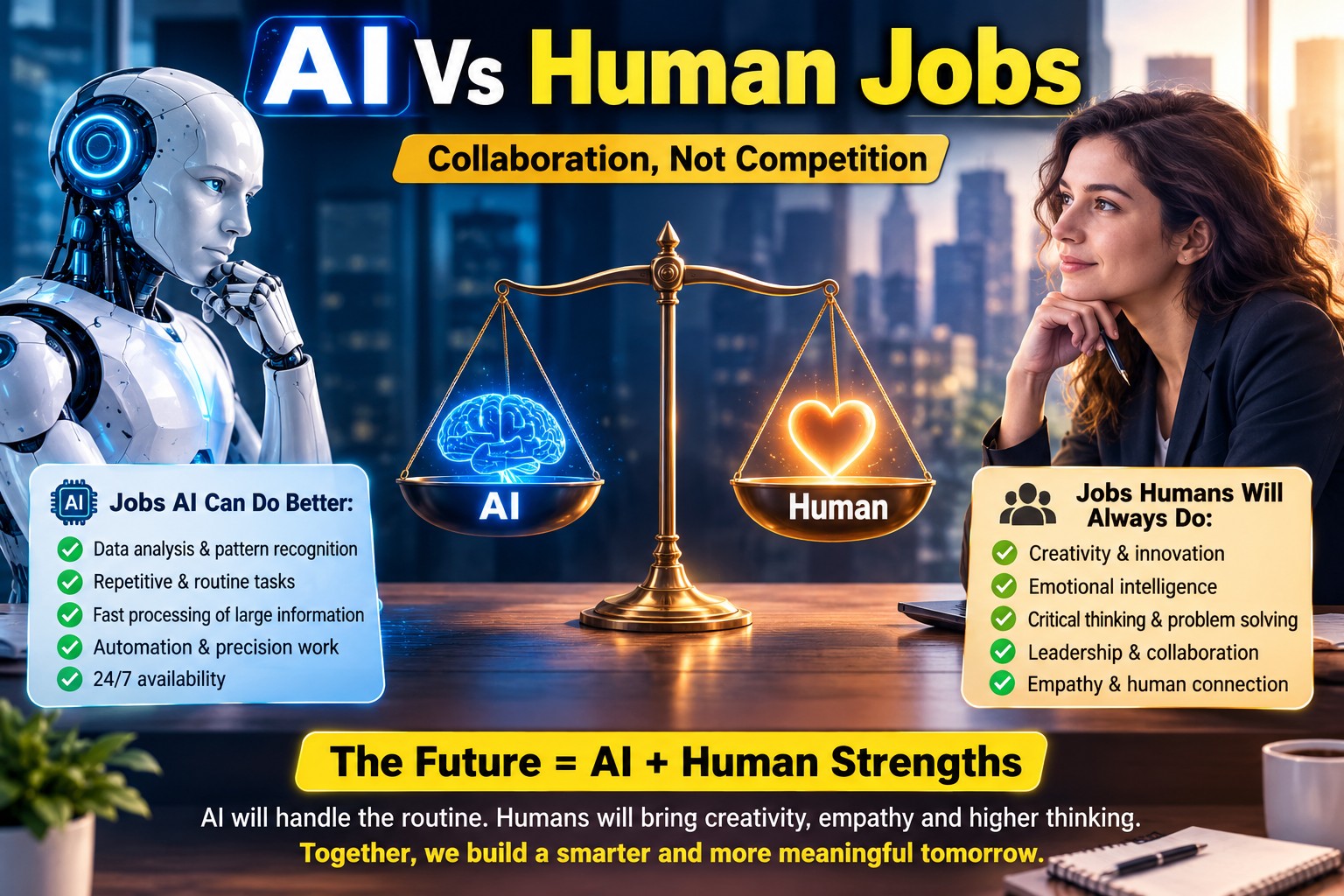
Yes, I believe AI will replace a considerable number of jobs, particularly those involving repetitive, predictable or data-driven tasks. For instance, customer support, basic data entry and some administrative roles can already be automated to a significant extent. However, I don’t think AI will simply eliminate employment altogether. Instead, it is more likely to reshape the job market. New professions will emerge, while existing workers will have to acquire new skills and adapt to changing demands. Jobs requiring empathy, creativity, leadership and complex interpersonal communication are likely to remain relatively resilient. So, in my view, the biggest challenge isn’t AI replacing humans; it’s humans failing to adapt quickly enough to an AI-driven economy.
4. Is modern technology making people less sociable?
In some ways, yes. Social media and messaging apps have made communication incredibly easy, but they can sometimes create an illusion of social connection. People may have hundreds of online contacts but still lack meaningful relationships in real life. It’s also quite common to see a group of friends sitting together while everyone is absorbed in their own phone. However, I wouldn’t say technology inevitably makes people antisocial. It depends largely on how it is used. Video calls, for example, can help families and friends stay connected when they live thousands of kilometres apart. So, I would say technology can either strengthen or weaken social bonds, depending on whether it complements or replaces genuine human interaction.
5. Should children be allowed to use AI for their studies?
Yes, but with clear boundaries and proper supervision. AI can be an excellent educational tool because it can explain difficult concepts, provide instant feedback and adapt explanations to a student’s level. However, if children simply ask AI to complete their homework, they may become passive learners and fail to develop essential skills such as critical thinking and problem-solving. Therefore, I think teachers and parents should encourage children to use AI as a learning companion rather than a shortcut. For example, students could ask AI to explain a difficult topic and then write the answer independently. Used responsibly, AI could make education more personalised without undermining genuine learning.
🔥 Band 9 Vocabulary to Reuse
- overly dependent on → relying on something too much
- excessive reliance → depending on something excessively
- profound impact → extremely significant effect
- far-reaching consequences → effects extending widely
- reshape the job market → fundamentally change employment
- adapt to changing demands → adjust to new requirements
- relatively resilient → able to withstand change
- illusion of social connection → feeling connected without genuine relationships
- strengthen social bonds → improve relationships between people
- with clear boundaries → with sensible limits
- passive learners → learners who do not actively think or participate
- a learning companion rather than a shortcut → a tool for understanding, not cheating
- undermine genuine learning → weaken real learning